U.S. Government Shutdown Crisis: Beyond Surface-Level Institutional Crisis and Market Restructuring
- Professor Michael Hartnett

- Oct 6, 2025
- 7 min read
A Comprehensive Analysis from Professor Michael Hartnett's Perspective
In the American political arena, government shutdowns have seemingly become a "normalized" tool of political gamesmanship. However, renowned financial markets expert Professor Michael Hartnett, in his latest analysis, argues that we can no longer view this government shutdown simply as a byproduct of political games. Instead, we must understand this phenomenon from the deeper perspectives of institutional crisis, structural market adjustments, and fundamental economic reshaping.
The True Face of Institutional Dysfunction: Far More Than a "Pause Button"
Deep Damage to Core Functions
Professor Hartnett emphasizes that while the media and markets generally describe the government shutdown as a "partial government closure," this characterization severely underestimates its real impact. During a government shutdown, although "essential functions" such as defense and public safety continue to operate, many activities crucial to market operations face delays or complete suspension:
Interruption of Data Releases: The timely release of economic data is fundamental to market decision-making. When agencies like the Bureau of Labor Statistics and Department of Commerce cannot operate normally, the absence of critical information such as employment data, inflation indicators, and industrial output creates "information blind spots" in the market.
Stagnation of Regulatory Approvals: The halt in approval processes by regulatory agencies like the SEC directly affects IPO procedures, merger transactions, and other important capital market activities.
Chaos in Fiscal Expenditure Execution: Delays in government contract execution not only affect contractors but also create chain reactions, impacting entire supply chains and related industries.
Amplification Effects of Confidence Shocks
More seriously, the government shutdown sends a strong signal of "governance instability" to global markets. Professor Hartnett believes that against the backdrop of current global economic uncertainty, questioning the U.S. government's governance capacity may trigger:
Marginal Capital Flight: International investors may reassess the political risk premium of U.S. assets
Amplified Volatility: Market sensitivity to policy uncertainty significantly increases
Rising Credit Costs: Financing costs for businesses and government may rise due to political risk
Long-term Threat of Human Capital Erosion
The most overlooked yet potentially most destructive risk is "human capital erosion." During government shutdowns, large numbers of highly skilled government employees face unpaid furloughs, with some potentially permanently moving to the private sector. This talent drain poses a threat to the government's long-term capacity in research, infrastructure development, and regulation.
As Professor Hartnett states: "This is not a simple matter of calculating economic losses, but a systematic weakening of national governance capacity."

Market Response: Dual Logic of Short-term Volatility and Long-term Restructuring
Characteristics Analysis of Initial Market Turbulence
Professor Hartnett observes that market reactions in the early stages of government shutdowns exhibit distinct differentiation characteristics:
Sell-off Wave of Sensitive Assets:
High-valuation, high-growth sectors like technology stocks bear the brunt
Industries with high political sensitivity (such as defense contractors and infrastructure companies) face greater pressure
Risk premiums for highly leveraged companies rise significantly
Capital Inflows to Safe-haven Assets:
Rising gold prices reflect investor concerns about political risk
Increased demand for U.S. Treasuries, showing "political safe-haven" characteristics
The dollar's trajectory becomes complex, supported by safe-haven demand yet dragged by political risk

Institutional Investors' Predictive Capabilities
Unlike the passive reactions of retail investors, institutional investors demonstrate stronger predictive and adaptive capabilities:
Advance Positioning in Defensive Assets: Through options, ETFs, and derivatives markets, institutional investors begin adjusting their portfolio allocations before government shutdowns.
Employment of Complex Hedging Strategies: Utilizing cross-market arbitrage, volatility trading, and other strategies to generate excess returns or avoid risks.
Deepened Policy Scenario Analysis: Building more refined policy risk models, conducting probability-weighted analysis of different political outcomes.
Medium-term Valuation Recalibration
If the government shutdown persists for an extended period, markets will enter a deeper adjustment phase:
Repricing of Interest Rate Paths: Uncertainty about Federal Reserve monetary policy increases, and market expectations for future interest rate trajectories may undergo fundamental changes.
Systematic Adjustment of Risk Premiums: Not just individual assets, but the risk premiums of all U.S. assets may face reassessment.
Structural Allocation Changes: Investors may place greater emphasis on political stability, questioning the traditional "American exceptionalism."
Multi-dimensional Impact on Economic Fundamentals
Weakening of Fiscal Multiplier Effects
The delay in government spending is not merely a quantitative reduction but, more importantly, a timing mismatch. Professor Hartnett points out:
Interruption of Public Investment Projects: The stagnation of infrastructure construction, research funding, and other projects will have long-term negative effects.
Chain Reactions of Government Procurement: The government is an important customer for many industries, and interruptions in procurement activities will ripple through entire supply chains.
Fiscal Pressure on Local Governments: Local governments dependent on federal transfer payments face cash flow problems.

Deterioration of Consumer and Investment Confidence
Income Uncertainty for Federal Employees: The consumption capacity of approximately 2 million federal employees and their families is directly affected.
Operational Difficulties for Government Contractors: A large number of businesses dependent on government contracts face cash flow crises, potentially leading to layoffs and investment cuts.
Psychological Impact of Uncertainty: Even groups not directly affected may reduce spending due to concerns about economic prospects.
Policy Blind Spots from Data Gaps
Difficulties in Monetary Policy Decision-making: The Federal Reserve needs timely and accurate economic data to formulate policies, and data gaps increase the risk of policy errors.
Confusion in Market Expectations: Investors lack necessary information to form reasonable expectations, exacerbating market volatility.
Difficulties in International Comparisons: Other countries and international organizations find it difficult to accurately assess U.S. economic conditions.
Deep Logic of Policy Gaming and Risk Management Strategies
Boundaries of Political Games and Market Backlash
Professor Hartnett believes that politicians' "hard bargaining" logic in budget and debt ceiling negotiations, if excessively undermining market confidence, may trigger "policy backlash":
Market Punishment Mechanisms: Market reactions such as stock market declines and rising bond yields will create political pressure on politicians.
Pressure from Interest Groups: Affected businesses and industry organizations will influence policy-making through lobbying and other means.
Changes in Voter Sentiment: Economic losses will ultimately translate into votes, affecting politicians' reelection prospects.
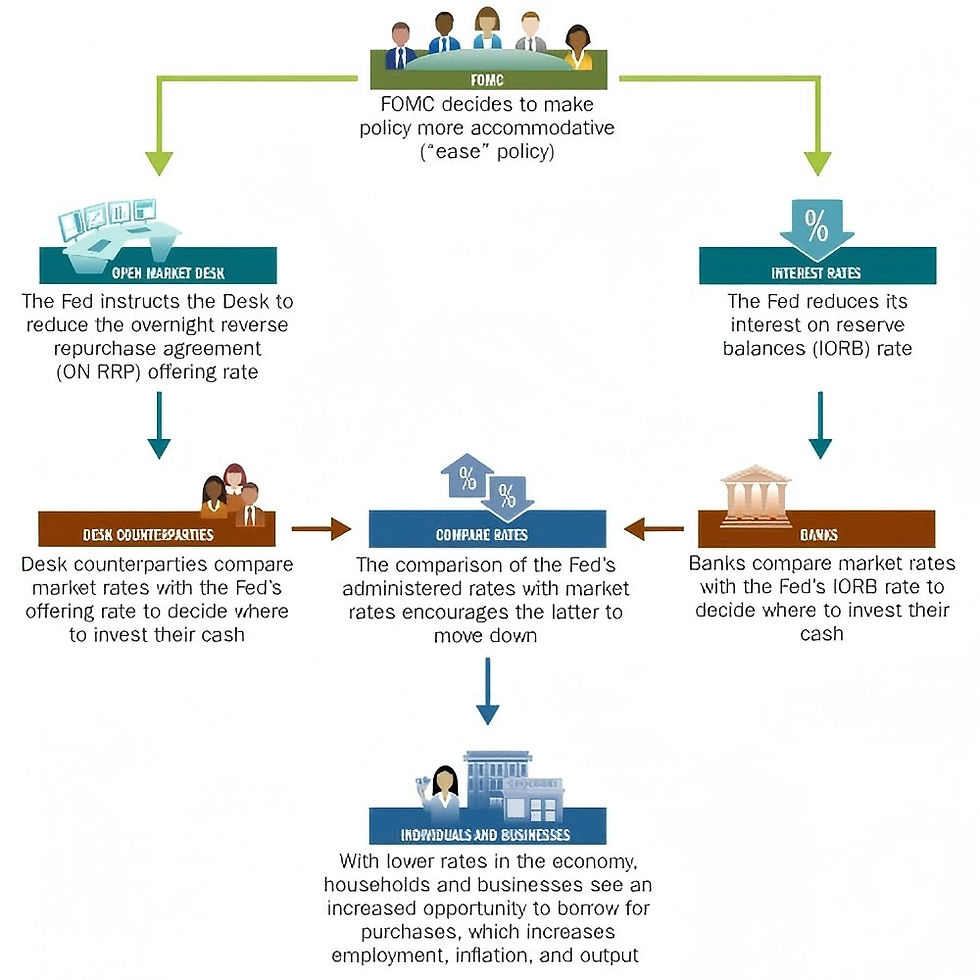
Enhanced Value of Hedging Tools
In an environment of intensified institutional uncertainty, the value of various hedging and arbitrage tools significantly increases:
Active Options Markets: Volatility trading becomes a hotspot, with fear indices like VIX becoming important references.
Increased Demand for Credit Default Swaps (CDS): Investors seek protection against political risks.
Cross-market Arbitrage Opportunities: Pricing differences for the same risk across different markets create arbitrage spaces.
Dynamic Adjustment of Asset Allocation
Professor Hartnett suggests investors adopt more flexible asset allocation strategies:
Short-term Caution, Long-term Optimism: Maintain defensive positions during political uncertainty periods while preparing for long-term opportunities.
Importance of Liquidity Management: Ensure sufficient cash or highly liquid assets to respond to emergencies.
Rethinking Diversified Investment: Traditional asset allocation models may need to consider more political risk factors.
Forward-looking Observation of Key Inflection Points
Amplified Divergence in Federal Reserve Policy Paths
In recent weeks, public disagreements within the Federal Reserve regarding further rate cuts, timing, and future rate ranges have emerged. Professor Hartnett views this as a key variable for future market volatility:
Different Voices from Regional Fed Presidents: Different regional economic conditions and policy preferences lead to internal Fed disagreements.
Conflict Between Data Dependence and Political Pressure: Data gaps caused by government shutdowns make data-dependent monetary policy more difficult.
Coordination Issues with Fiscal Policy: Lack of coordination between monetary and fiscal policies may exacerbate economic volatility.

Disruption Risks to IPO and Capital Market Activities
With the SEC operating in "minimal function" mode during shutdowns, IPO approval processes slow down, which may have profound impacts on multiple areas:
Financing Difficulties for Emerging Companies: Particularly technology startups dependent on equity financing.
Blocked Venture Capital Exits: IPO channel blockages affect venture capital exits and reinvestment.
Structural Changes in Market Liquidity: Reduced new stock supply may affect overall market liquidity and pricing.
Critical Point of Public and Corporate Confidence
If the government shutdown persists for several weeks, consumer confidence and corporate spending expectations may experience critical point declines:
Deterioration of Consumer Confidence Index: Historical data shows that government shutdowns' negative impacts on consumer confidence typically have lag effects.
Postponement of Corporate Investment Decisions: In uncertain environments, companies tend to postpone major investment decisions.
Indirect Employment Market Effects: Although government shutdowns directly affect limited employment, their impact on overall employment market confidence may be greater.
Credit Rating and Treasury Risk Exposure
Some rating agencies have already warned that U.S. sovereign credit may suffer from political deadlock. Professor Hartnett particularly focuses on potential "rating downgrade" impacts on long-term rates, capital costs, and dollar credit attractiveness:
Importance of Sovereign Credit Ratings: The U.S. Treasury's status as a "risk-free asset" may be challenged.
Global Reserve Currency Status: Frequent political crises may weaken the dollar's reserve currency status.
Changes in International Capital Flows: Other countries may reconsider their foreign exchange reserve allocations.
Conclusion: Finding Certainty in Uncertainty
Professor Hartnett's analysis provides us with a new perspective to understand the U.S. government shutdown crisis. This is not merely a short-term political event, but a manifestation of deep contradictions in the American political system, whose impacts will extend far beyond the moment when the government reopens.
In this era full of uncertainty, both investors and policymakers need to rethink traditional assumptions and models. Political risk is no longer an exclusive label of emerging markets; developed countries also face institutional challenges.
As Professor Hartnett emphasizes, what we need is not simple predictions, but deeper understanding and more flexible adaptive capabilities. In the complex and changing global political-economic environment, the only certainty is uncertainty itself.
The current crisis reveals fundamental questions about governance, market resilience, and the interconnectedness of political and economic systems. It challenges us to develop more sophisticated frameworks for understanding and managing systemic risks in an increasingly complex world.
Moving forward, the ability to navigate these uncertainties—whether as investors, policymakers, or citizens—will depend on our capacity to learn from these crises and build more robust, adaptive institutions and strategies.
This article is compiled based on Professor Michael Hartnett's professional insights and deep understanding during the U.S. federal government shutdown crisis. The content is for academic research and educational purposes only and does not constitute investment advice. Investment involves risks; decisions should be made carefully.
About the Author: Professor Michael Hartnett is a distinguished scholar in financial markets and public finance, with deep professional knowledge and rich practical experience in U.S. financial markets and public fiscal policy.
Disclaimer: This analysis is based on public information and academic research. The views expressed represent only the author's personal position and do not constitute any form of investment advice or policy recommendations.


Comments